Sports Team Portraits Melbourne: Team Captains, Coaches, and Youth—Same Pro Standard
Walk past a club’s meeting room on a weeknight and you’ll see the usual chaos: hoodies half-zipped, boots stacked in a corner like they’ve given up, and a folder of forms that somehow always looks newer than it should. Then you notice the one thing that never quite looks settled yet, even when the team is strong and the season is going well, the portraits.
Not because anyone doesn’t care. It’s usually because the portraits ask for a level of consistency that clubs rarely have time to engineer. Captains need a certain look. Coaches need authority without feeling stiff. Youth players need clarity without feeling like they’re being herded into a corporate photo shoot. And every athlete needs to feel like themselves, not like a subject someone rushed.
That’s where “same pro standard” stops being a nice idea and becomes a practical promise. In Melbourne, I’ve learned the look is easy to describe, but the execution is where most people slip, mostly due to time, lighting, and how kids actually behave when they’re excited, hungry, cold, or just coming off a training session. The difference between average team photos and something you’re proud to frame is the attention to those details.
This is a guide written from real shoots, real clubs, and the reality of photographing captains, coaches, and youth in the same session, on the same day, with the same standard.
What “same pro standard” actually means on a team day
A senior team portrait can get away with a bit of uniformity. Most players know the drill: stand here, look here, stay still. The coach is used to being the point of contact. Everyone understands the purpose.
Youth is different. The goal is still professional, but the process has to be kinder, faster, and more forgiving. That doesn’t mean lower expectations. It means your method has to shift while your output quality stays consistent.
In practice, “same pro standard” shows up in details like these:
First, the background needs to behave. A sunny patch that’s fine for a captain can blow out a toddler’s face if they move half a step. Second, the skin tones have to stay natural across ages and skin types, which requires you to control exposure rather than rely on the camera to guess. Third, the team image has to read as one group, even when players are different heights and moving differently.
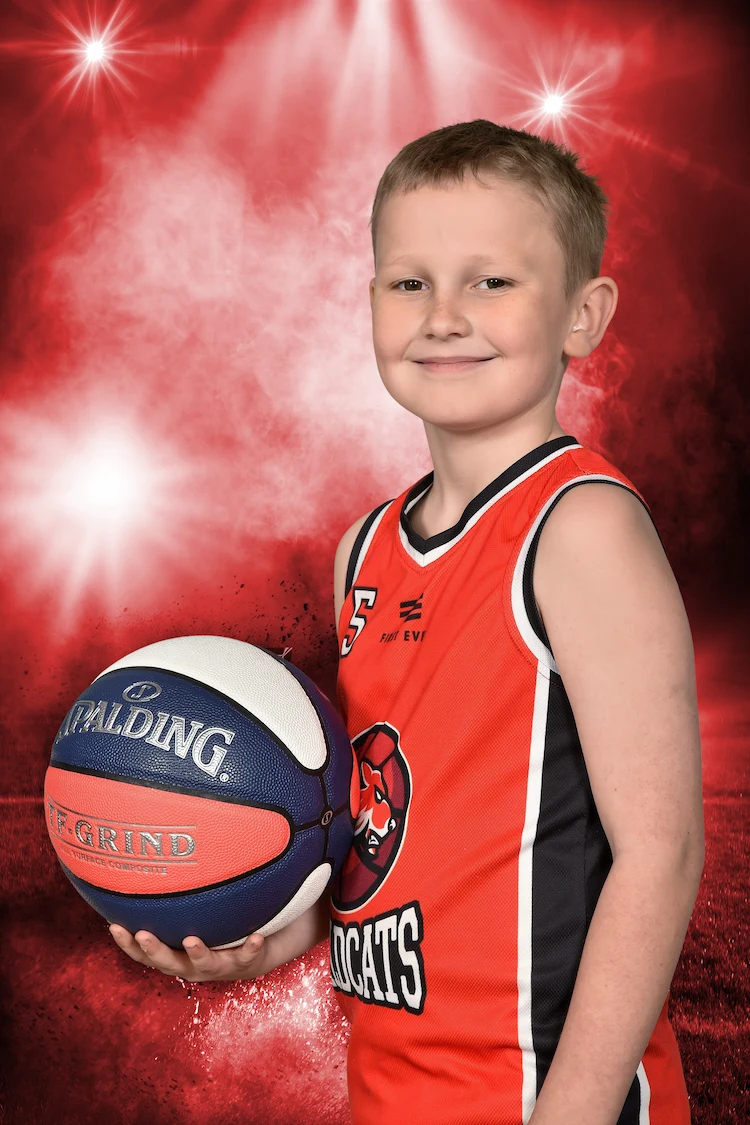
When I photograph sports teams in Melbourne, I’m aiming for a result where you can put a youth captain’s portrait beside a coach’s portrait and it still looks like it came from the same professional setup. That’s not just lighting. It’s how the framing, contrast, and colour treatment match. It’s the sharpness in the eyes. It’s the way the shadows sit on faces instead of swallowing them.
It’s also the discipline to keep refining instead of declaring “good enough” because the clock is ticking.
Captains: the calm that photographs as confidence
Captains are often the hardest group to photograph well, not because they’re difficult, but because they carry attention. They’re expected to lead, which usually means they stand with purpose. That’s great for the team dynamic, but it can make them look tense in still photos if the session is rushed.
I’ve seen this in multiple sports across Melbourne. A captain shows up ready, but once they sit or stand under bright overhead light, shoulders rise, jaw tightens, and the eyes start hunting for someone to watch. Their coach might be telling them, “Just relax,” and it’s true, but relaxation isn’t instant. It’s something you guide into a pose.
The small adjustments matter. I’ll ask captains to shift weight rather than hold perfectly still. I’ll coach a micro bend in the front knee if the stance looks locked. I’ll talk them through where to look, not just “look at the camera,” because that phrase can make athletes stare like they’re waiting for a whistle.
One of my favourite things to do is to give captains a short job. Hold the ball for a second, fix the grip on the strap, set the jersey where it should sit. It sounds silly until you watch what happens. Doing something uses their leadership energy productively instead of letting it turn into stiffness.
When the captain looks ready, the rest of the team often follows. That’s why captains get priority in the flow. If you photograph them first, you set the tone for how the group will settle.
Coaches: authority without the “posed adult” look
Coaches usually want the portrait to represent trust. They’re the reason the team shows up, the reason players learn structure, and the reason families decide this club is worth their time. In a photo, that translates to steadiness.
But steadiness can look like a forced smile and a rigid stance if the session doesn’t respect how coaches naturally carry themselves. Many coaches Click here instinctively try to “perform” professionalism. They stand like it’s a meeting photo. Their arms go stiff, their shoulders go high, and their eyes look slightly trapped.
Instead of fighting that, you can work with it. I’ll often start by letting the coach do what they do naturally: adjust equipment, check something on a clipboard, look toward the group for a moment. Then I shift them into the portrait pose. You want the authority to come from calm, not from tension.
Coaches also have a timing advantage. Unlike youth players, they can wait through a process. That means you can photograph them with more variation in expression and pose while the kids are still learning to settle. The key is to protect their energy. If you keep them waiting too long, the portrait becomes less about who they are and more about how long they’ve been stood around.
From a production standpoint, coaches are also a critical anchor for the “same pro standard” promise. If the coach’s lighting is slightly different from the youth group, the inconsistency becomes obvious. When I’m shooting sports team portraits in Melbourne, I’m thinking about the entire set, not just each frame.
Youth: professionalism without losing their personality
Youth portraits are where most photographers either shine or struggle. The challenge is not technical. The challenge is emotional.
Kids respond to the environment faster than they respond to instructions. If they’re cold, they’ll curl. If they’re excited, they’ll bounce. If they’ve been told to “be still,” they’ll wobble. If they see an older sibling or a teammate moving, they’ll copy.
The solution isn’t stricter direction. It’s better momentum.
A practical approach I’ve used across many Melbourne clubs is to build portrait time like short training intervals. You’re not trying to create a perfect pose for ten minutes. You’re capturing a series of close-to-perfect moments in a sequence and then choosing the frame that looks like “them” but also looks composed.
That might mean you photograph a youth player during a quick warm-up moment, when their expression is naturally bright, and then you use a gentle cue to settle their gaze for the final shot. It also means you accept that “perfect still” isn’t realistic. The pro look comes from clean focus on eyes and a background that doesn’t fight the subject.
I also make sure the youth portraits match the adult portraits in style. That means similar framing decisions, similar colour handling, and consistent background choice. If the team photo has a certain mood, youth portraits should not feel like a separate event.
The most common mistake I see with sports photography is that the youth photos end up either too harsh or too soft. Harsh happens when exposure is chased too aggressively for clarity. Too soft happens when people prioritise comfort and forget that shutter speed and focus still matter. For youth, you don’t need harshness. You need precision.
The Melbourne reality: weather, light, and why timing is everything
Melbourne weather does not care about your schedule, and that matters for sports team portraits. Even on “nice” days, the sky can shift from bright to patchy to flat within minutes. That’s why the plan has to include flexibility without becoming chaos.
If you’re shooting outdoors, your background should be forgiving. Overly detailed backgrounds compete with faces and jerseys. Harsh sun creates inconsistent shadows, especially when the team includes both tall adults and short youth athletes. Cloud cover can be kind, but only if you’re ready for lower contrast and the need to maintain skin tone accuracy.
If you’re shooting indoors, you run into different challenges. Indoor venues often have overhead lighting that can create unwanted reflections on shiny surfaces and an uneven brightness across the group. It’s also common to have mixed lighting colours, which can make team uniforms look different from coach portraits, even when the same camera settings are used.
A photographer melbourne families trust is not just someone with gear. It’s someone who understands how light changes across bodies and how to keep consistency through exposure control.
On a team day, the best workflow I’ve found is to photograph the most “difficult to direct” subjects first, then move into the groups once the lighting and energy are stable. That might be youth portraits first if they settle quickly that day. It might be captains first if they need confidence built. Coaches can usually handle a slower pace, but if the venue is cramped, they benefit from efficiency too.
The common thread is decision-making. Not sticking to a rigid checklist no matter what the sky does.
Building sets that feel like one story
When families order portraits, they rarely want “a set of separate photos.” They want a coherent record of the season. That’s true for individual player portraits, coach portraits, and team captains.
To make it feel like one story, you need consistent styling and consistent image treatment.
Styling is the unglamorous part. Jerseys should sit the same way for adults and youth, and any team warm-up items need a decision early. Some clubs want the kit clean and simple for portraits. Others want the training vibe. Either is fine, but inconsistent styling creates visual noise. You can’t fix that with editing alone.
Image treatment is where consistency becomes visible. Skin tones, contrast, and sharpening choices should not change from one age group to another. If youth portraits are slightly warmer than the coach’s portrait, your set will feel mismatched even if the lighting was close.
This is also why preparation helps, even if you don’t want to sound like a studio process. A small amount of coordination can prevent big problems later. If the team captain portrait is taken at a slightly different time of day than the youth portraits, you can still match them in post, but it costs time and introduces risk.
If you’re commissioning Melbourne Sports Team Portraits, the expectation is that the team captains and coaches appear as part of the same visual language as youth. Otherwise you end up with a portfolio that looks like it was assembled, not captured.
A practical flow that keeps everyone moving
Most clubs run behind schedule, especially when you combine training with school pickup and siblings in tow. The trick is to run a session where everyone feels included and no one feels rushed into a bad frame.
I’ll often start with the adults who set the tone. Captains first, then coaches, then youth individuals. Once individuals are done, team images become easier because players can see where they should stand and what “ready” looks like.
There’s also a psychological benefit. Youth players behave differently when they watch older athletes being photographed. It helps them understand the seriousness of the moment. It also gives them cues about holding posture without being told explicitly.
But you have to watch for fatigue. Youth sessions can drag if everyone waits too long between turns. If you keep players in a line and photograph them one by one slowly, you lose smiles. If you move too fast, you lose composition. The best pace is the one that matches the group’s mood.
On the day, I treat the session like a sequence of short peaks. Captains get their peak shot first. Coaches get variation quickly. Youth gets enough time to settle but sports photographer not enough time to get bored.
If you want true professionalism, you plan for interruptions. A parent arriving late with a missing jersey, a kid who needs a quick snack, a coach who says they want a slightly different background for their portrait. Those are normal. The difference between an average shoot and a professional one is how smoothly those interruptions are absorbed.
What you actually need to prepare before the photographer arrives
Preparation isn’t about making everything perfect. It’s about preventing avoidable delays and preventing the “we’ll fix it later” mindset, which rarely works on the day.
I’ll mention a few basics that consistently help clubs in Melbourne:
- Confirm who the team captains are, and whether you want one portrait each or multiple variations (for example, portrait with team logo visible versus without).
- Decide how you want coaches positioned in the set, standing alone first or joining a group image later.
- Make sure jerseys and training wear are clean and ready, with any sponsor patches aligned.
- Confirm the intended locations, especially if you’re aiming for outdoor Sports Team Portraits Melbourne style images with a natural background.
That list isn’t meant to stress people out. It’s meant to keep everyone on the same page so the shoot focuses on creating good portraits, not solving avoidable problems.
If you’re working with a sports photographer, ask about their recommended flow. A professional photographer will often share a plan that respects the club’s reality.
Trade-offs: outdoors beauty versus indoor control, and the real choice
You can get beautiful portraits outdoors, especially with Melbourne’s variety of urban and park backdrops. But the trade-off is control.
Outdoors, you’re at the mercy of sun angles and sudden wind. Wind affects hair, and hair affects focus and sharpness. It also affects jersey movement, which can be charming in action shots but risky in formal portraits if the fabric flutters at the exact moment you’re capturing eyes.
Indoors, you typically gain control of light and consistency. The downside is space. Some venues are too small to create clean backgrounds, and the light can be mixed if there are coloured signs or daylight from windows.
The “same pro standard” approach isn’t about choosing one over the other. It’s about making the choice that supports consistent output. If the club wants uniform portraits across youth and adults, I’ll lean toward the environment that gives the most stable exposure and background separation.
In some cases, that means shooting outdoors but choosing a shaded area or a consistent wall background. In other cases, it means using indoor lighting principles and accepting that the background will be plainer. The goal is to protect the faces and the team identity.
How editing stays consistent across captains, coaches, and youth
If you’ve ever received a set of team portraits and noticed that the adult images look crisp and natural but youth looks slightly off, you’ve seen inconsistent processing.
Editing is not just about “make it nicer.” It’s about consistent decisions. That includes how you handle exposure in shadows, how you protect skin tone highlights, and how you keep whites from turning grey on jerseys.
From a workflow perspective, consistency comes from treating the full set as one project. I’ll often batch review the portraits at multiple zoom levels. The difference between a professional result and a good one is often in the micro details, like whether the eyes look sharp without adding harshness to skin.
For youth, it matters even more. Over-sharpening can make skin look textured in a way that doesn’t suit children. Over-smoothing can take away the natural look families expect. You want youth to look like youth, not like a retouched adult.
Captains and coaches tend to be less forgiving too. If your contrast treatment is too heavy on one group, their portraits can look dramatic in a way that doesn’t match the others.
The best Melbourne sports team portrait sets have a subtle, consistent style. It’s the kind of style you notice only when it’s missing.
Keeping families at ease during the session
A professional session is not only technical. It’s also social. Parents are watching. Players are watching. Coaches are trying to manage the moment and may be juggling scheduling pressure.
If the session feels tense, it bleeds into body language. If the session feels calm, players settle faster.
What helps is a photographer who communicates with clarity and rhythm. Short direction works better than long instructions. You need cues that players can follow immediately. You also need reassurance when something doesn’t go as planned, because someone will always ask if a child is “doing it wrong.”
I’ve had moments where a youth player’s concentration slipped because they thought they were being judged. A simple adjustment, changing the cue from “look serious” to “give me your game face” can help a lot. The words are not magic, but the intent is. Kids hear tone differently than adults.
Captains can also benefit from a grounded approach. They’re often trying to get everything right. A photographer who treats them like athletes rather than actors can produce better results faster.
Choosing the right sports photographer for the look and the process
It’s tempting to choose a photographer based on portfolio photos alone. Those are important, but for team portraits, the process matters just as much.
When people search for sports photographer options in Melbourne, they often want reassurance that the photographer can handle groups of different ages without turning it into chaos.
So look for signals like these when you talk to a photographer:
A willingness to discuss flow, including how they photograph captains, coaches, and youth in the same session. Experience with outdoor and indoor conditions, because the weather and venue can change. And an approach to consistency, because families pay for a unified look, not a collection of unrelated portraits.
If a photographer only talks about camera settings and not about how they’ll direct a team, you may run into trouble on the day. Direction is half the product in team portraits.
What a “pro standard” delivery feels like for families
After a successful shoot, families don’t just say the photos look good. They describe how it feels.
They notice the captain looks confident without being stiff. They notice the coach looks authoritative without looking like they’re waiting for a meeting to start. They notice their child looks like themselves, but with a clarity that makes the photo frame-ready.
They might also comment on details like jersey colours looking consistent across the set, or the team photo not looking like it was assembled after the fact. When you deliver that kind of coherence, you’re doing more than photography. You’re creating a season record that parents keep.
And that’s the real reason “same pro standard” matters. Youth seasons move quickly. Coaches change year to year. Captains rotate. The portraits are what stay.
If the set looks unified and professional, it becomes something families can return to, not just something they order quickly and forget.
A final word on expectations that make the shoot smoother
Professional sports team portraits in Melbourne are achievable, and they don’t have to feel like a production line. The key is respecting the differences between captains, coaches, and youth while still treating the final set as one cohesive body of work.
When you plan the flow around energy, understand how light behaves across ages, and commit to consistent processing and framing, the results look effortless, even when they were planned carefully behind the scenes.
That’s what you should expect when you’re commissioning Melbourne Sports Team Portraits, whether it’s a senior captain’s portrait, a coach’s authority shot, or youth portraits that capture personality without sacrificing clarity.
If you want, tell me the sport (netball, football, soccer, cricket, basketball, etc.), the approximate number of players, and whether the portraits will be outdoors or indoors in Melbourne. I can suggest a session flow that keeps everything consistent without running overtime.
Pure Sport Images
23 Grandview Ave, Mulgrave VIC 3170, Australia
+61 413 157 614
[email protected]
Website: https://puresportimages.com.au/